Last updated November 23, 2026
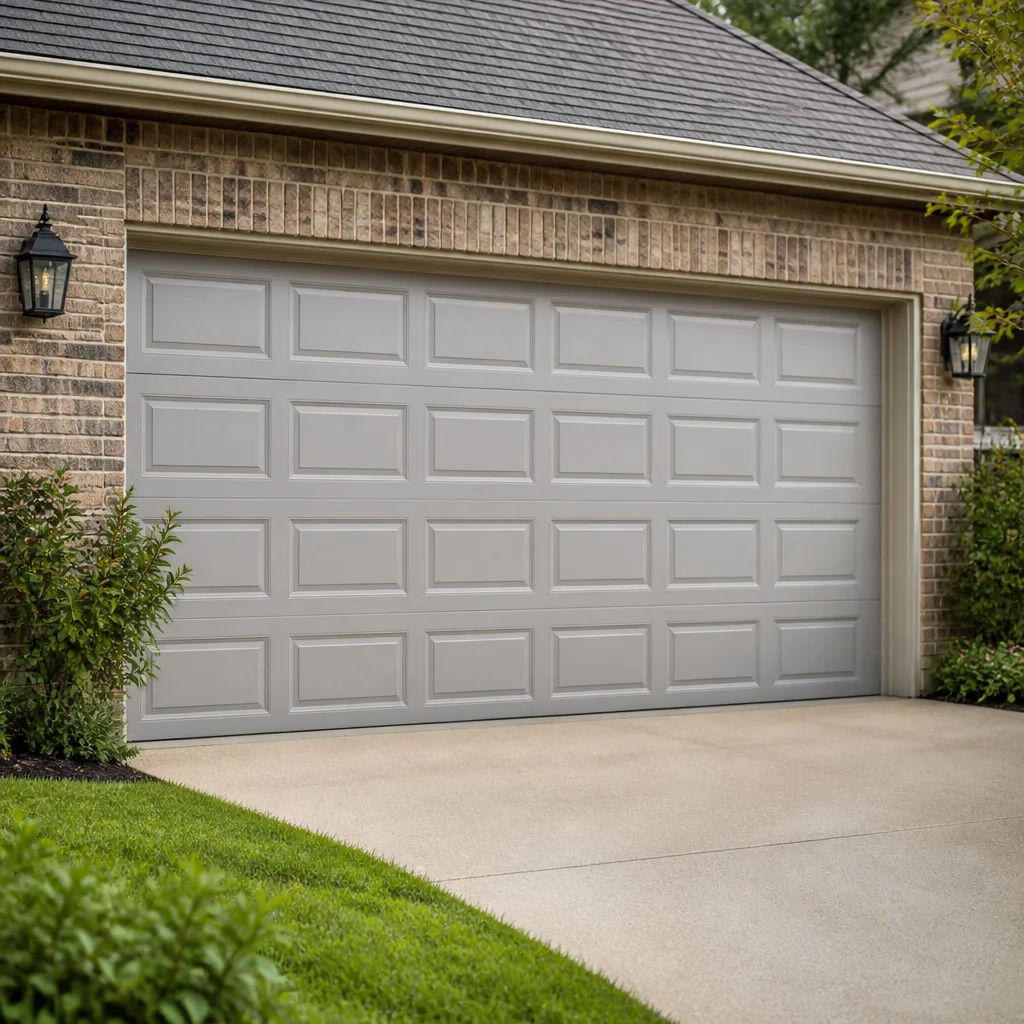 Raised-panel steel
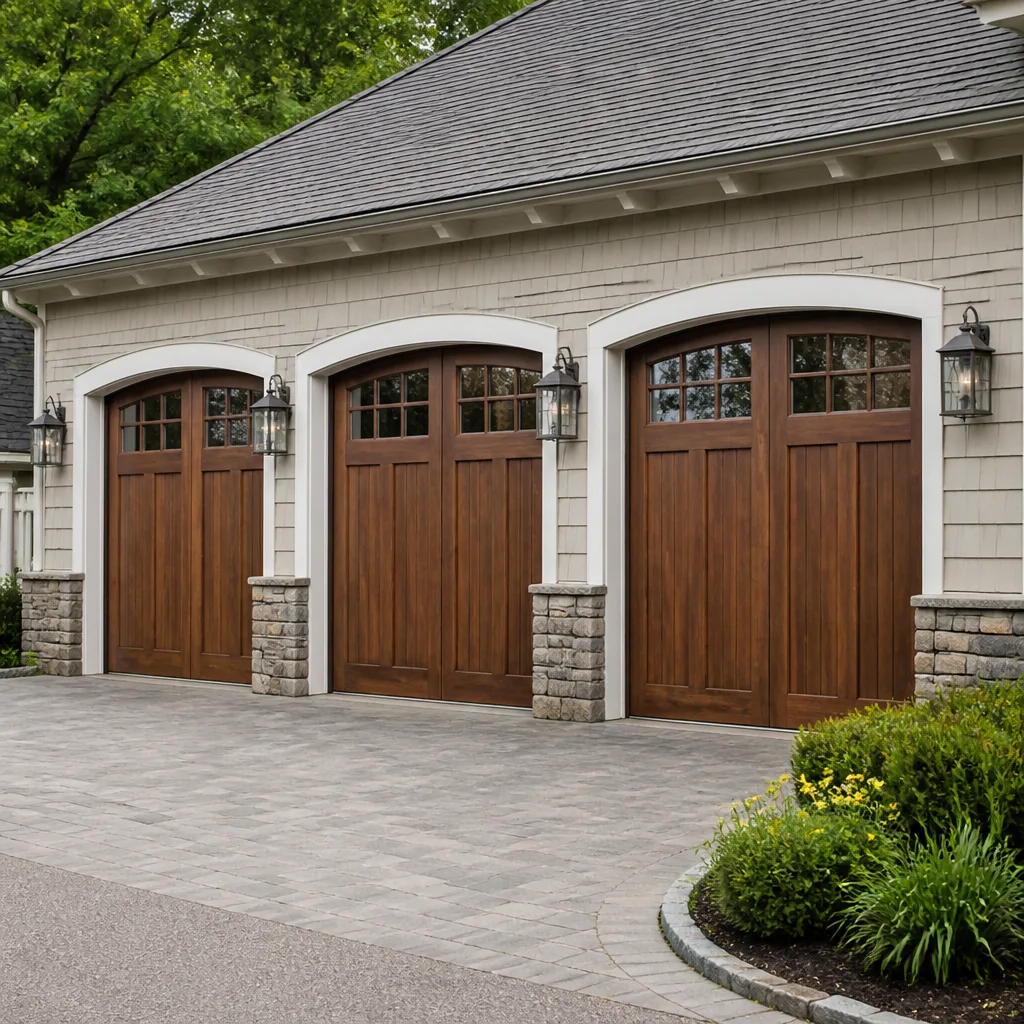 Carriage house
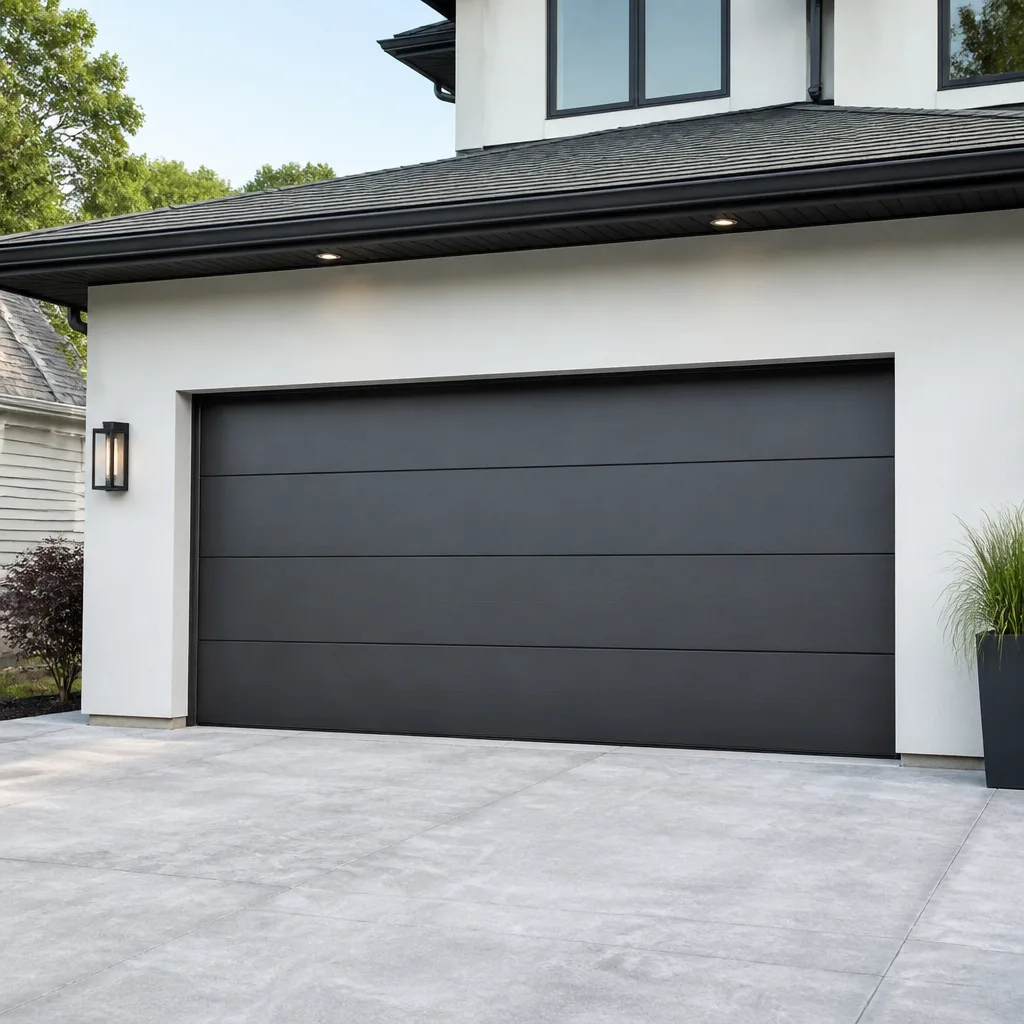 Modern flush
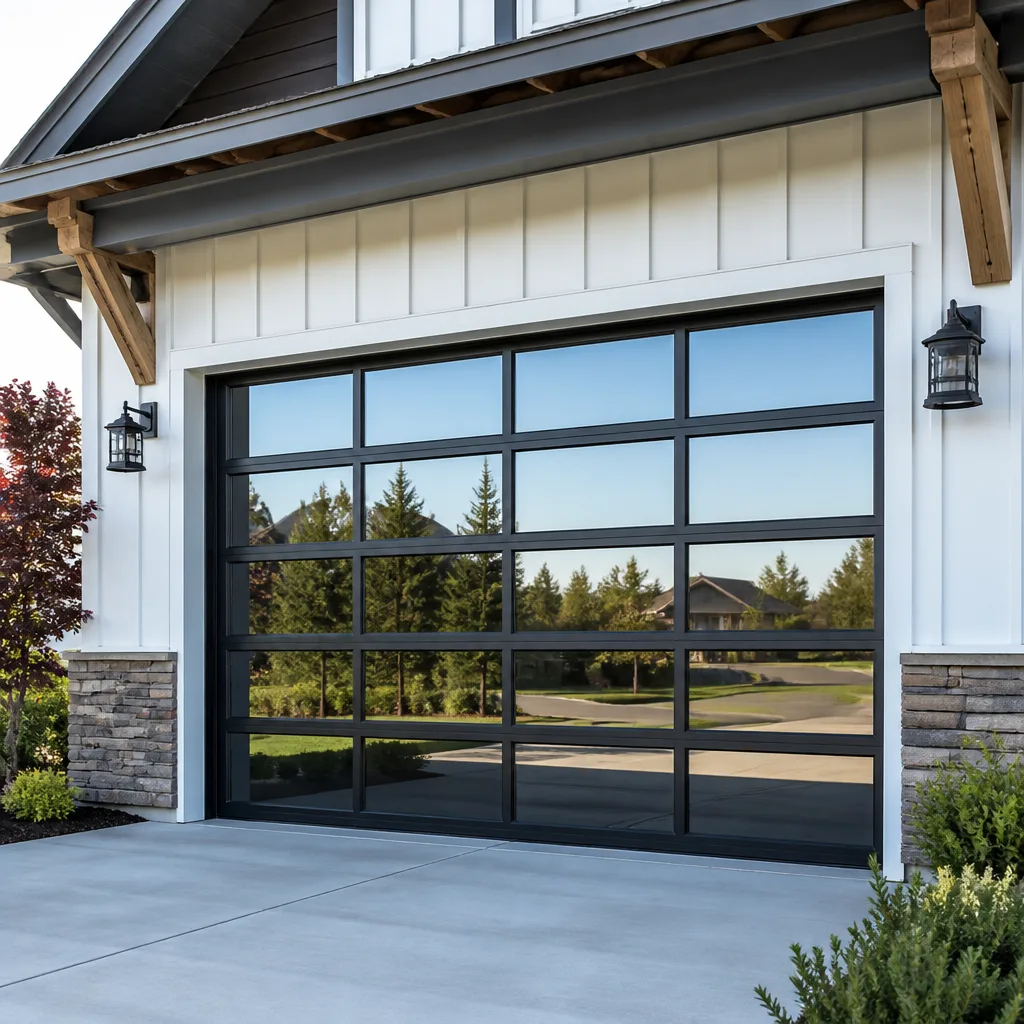 Full-view glass
 LiftMaster openers
 Chamberlain openers
Full 25-point door and opener safety check with every visit - springs, cables, rollers, tracks, and your LiftMaster or Chamberlain opener included
You get a price before we start. It does not change when the pro arrives.
Get your free estimateGarage Door Repair Troubleshooting in New Smyrna Beach: Common Problems and How to Fix Them
Telling a technician “my door won’t open” is like telling a doctor “I don’t feel good.” It’s true, but it tells us almost nothing. The real diagnosis starts with what the door does, what it sounds like, and where it stops. A door that hums but never moves is a different animal from one that moves three inches and reverses, and the two problems share almost no parts in common. In our experience across New Smyrna Beach, most failures trace back to five root causes, and the sooner you identify which one you’re facing, the faster the fix and the less risk of turning a small repair into a big one. This guide teaches you to read the symptoms accurately, do the safe checks yourself, and know the exact point where your wrench should go back in the toolbox and the phone should come out.
Quick Answer
Most garage door problems come down to one of five failures: the opener, the springs, the tracks and rollers, the safety sensors, or the cables. Homeowners can usually identify the culprit in under two minutes by watching and listening – a door that hums without moving points to the opener, one that feels impossibly heavy points to a spring, and one that reverses at the floor usually points to the sensors. Broken torsion springs and snapped cables are the two problems you must never attempt to diagnose or fix yourself. Both are high-tension components under extreme load, and both call for a trained technician. For everything else, this guide walks you through safe checks that won’t put your door or your safety at risk.
Styles & brands we work with
- Raised-panel steel
- Carriage house
- Modern flush
- Full-view glass
- LiftMaster openers
- Chamberlain openers
Table of Contents
- The Five Root Causes Behind Almost Every Failure
- The Manual Release Test: The Fastest Diagnostic Step
- Opener Failure: The Electrical Signature
- Spring Failure: When the Door Feels Like Concrete
- Track and Roller Problems: The Mechanical Grind
- Safety Sensor Misalignment: The Door That Reverses
- How New Smyrna Beach Humidity Accelerates Specific Failures
- Symptom-to-Likely-Cause Reference Table
The Five Root Causes Behind Almost Every Failure
Every garage door system is a marriage of two subsystems: the opener, which handles the electrical and mechanical drive, and the door itself, which is balanced by springs, guided by tracks, and supported by rollers and hinges. When something goes wrong, it goes wrong in one of five places, and each one leaves its own fingerprints.
- Opener failure: The door hums, clicks, or flashes lights, but nothing moves – or moves only if you help it. The motor, capacitor, logic board, or drive gear has a problem.
- Spring failure: The door is dead weight. It won’t lift by hand, or it slams down because nothing is holding tension. A snapped torsion spring usually makes a loud bang and leaves a visible gap in the coil.
- Track and roller failure: The door binds, screeches, or pulls sideways as it travels. Rollers may be worn flat, tracks bent, hinges loose.
- Safety sensor misalignment: The door starts down, then reverses abruptly, often with the opener light blinking. One of the two photo-eyes near the floor is blocked, dirty, or out of line.
- Cable failure: The door hangs crooked, one side drops, or you find slack cable draped near the drum. On many doors, a snapped cable means the door can come down unexpectedly.
Naming the root cause also tells you which jobs need a technician’s hands. In our experience across New Smyrna Beach, homeowners who can describe the sound and the stopping point before they call get a faster answer and a cleaner repair, because the diagnosis starts where it should. Our garage door repair team handles all five categories in one visit, so a door that stops working Monday morning doesn’t wait until a second company picks up the job.
The Manual Release Test: The Fastest Diagnostic Step
Before you touch a remote, an app, or any other part of the system, run the manual release test. It takes less than a minute, separates door problems from opener problems, and tells you whether the door is still safely balanced.
- Close the door completely. Make sure no one is standing under it and nothing is in its path.
- Pull the release cord. The cord hangs from the trolley on the opener rail. Pull straight down to disconnect the door from the opener rail.
- Lift the door by hand, about halfway. Use the bottom handle or a lift point, keep both feet clear, and use steady pressure.
- Let go at the halfway point. A properly balanced door stays where you leave it. If it drops fast, the springs are weak or broken. If it won’t lift at all, the springs or cables have failed.
- Reconnect the trolley. Push the door back down and pull the cord again (or cycle the opener once) so the trolley re-engages.
Read the results carefully. A door that lifts easily by hand but ignores the opener has an electrical problem, not a mechanical one, and that’s an opener repair rather than a door repair. A door that’s near-impossible to lift has a balancing failure, and that’s the spring or cable system. A door that lifts fine but grinds, wobbles, or pulls to one side has a track or roller issue. This single test turns a vague “my door is broken” into a specific, actionable diagnosis, and it’s the first thing we ask homeowners in New Smyrna Beach to check before we schedule anything.
One important caveat: after you run the test, do not leave the door disconnected from the opener in an open position. Without the opener holding it, a door with weak springs can drop under its own weight. If you’re ever unsure whether the door is balanced enough to disconnect, close it and leave it, and call us instead.
Opener Failure: The Electrical Signature
Openers are reliable machines, but they fail in patterns. An opener that hums for a few seconds without moving usually has a worn drive gear or a failing capacitor. One that clicks but does nothing may have a bad logic board or a dead remote battery. One that runs, reverses immediately, and blinks its light is usually telling you that the safety sensors are blocked – or that the force limits are out of adjustment.
Start with the simple checks:
- Replace the remote battery before assuming the opener is bad.
- Check that the wall button still works. If the wall button runs the door but the remote doesn’t, the problem is the remote or the radio receiver, not the motor.
- Look at the opener’s indicator lights. Most modern openers use a brief diagnostic code pattern when they fail, and the manual that came with the unit will tell you what it means.
- Inspect the safety sensors for dust, spider webs, and misalignment. In New Smyrna Beach, high humidity and warm nights mean the lenses fog and grow small growths quickly, so a wipe with a dry cloth fixes a surprising number of “broken” openers.
If you’ve ruled out the easy checks, the opener itself needs work, and that’s where a specialist who knows your brand matters. Our technicians work on the major opener brands, including LiftMaster, Chamberlain, Genie, and Craftsman, so we don’t swap out a working unit just because we don’t recognize the model. Our garage door opener repair service covers motor, logic board, capacitor, gear, and remote faults, and the same visit can address the door side if the opener problem has been masking a mechanical one. For doors with belt or chain drive, worn or slipping hardware can also mimic an opener failure, so the fix is sometimes far simpler than it seems.
What a “smart” opener changes
Wi-Fi and smart openers add a second layer of diagnosis because the app can report faults the wall button never shows. If the app reports “door blocked” or “obstruction detected” and the door looks clear, the sensor or wiring is the starting point. If the app drops offline during every cycle, the issue is often the power supply or a loose antenna, not the door.
Spring Failure: When the Door Feels Like Concrete
A garage door weighs hundreds of pounds. The springs are what make that weight moveable by a motor the size of a shoebox – or by a homeowner with one hand. There are two types: torsion springs, mounted on a bar above the door, and extension springs, which run along the horizontal tracks on either side. Both store enormous energy, and when they break, the door loses its counterbalance.
The telltale signs of a broken spring are:
- A loud bang from the garage, often followed by silence and a door that won’t open.
- A visible gap in the coil on a torsion spring, or a stretched-out, tangled extension spring.
- The door feels extremely heavy on the manual release test, or won’t lift at all.
- The opener strains, hums, or shuts off after a second because it can’t overcome the dead weight.
Here is where our guidance changes tone. Broken torsion springs and broken extension springs are not a homeowner job. The spring system is under high tension even when it looks still, and removing or adjusting a spring without the right tools and the right training can cause serious injury. If you suspect a spring has failed, stop running the opener, leave the door alone, and call. That’s the point where diagnosis ends and a trained technician starts.
Our technicians treat spring repair as a core service, not an upsell. It’s the most dangerous repair a homeowner can attempt, and many generalist shops avoid it or subcontract it out. We handle it in-house because that’s the whole point of a single-trade specialist. Our garage door spring repair service covers torsion and extension systems across all the common door brands, so we can fix the actual problem rather than patch it. If you’re not sure whether it’s a spring or a cable, describe what the door does and we’ll tell you what to expect.
Why springs fail faster in New Smyrna Beach
Springs fail from metal fatigue, and fatigue accelerates with every open-and-close cycle, temperature swings, and moisture. The New Smyrna Beach climate doesn’t freeze the metal, but it does keep the air humid and warm much of the year. Humid air, combined with the ambient warmth of an unvented garage, promotes surface rust on the torsion bar and spring coils. Once rust starts, the spring pits and loses strength unevenly, which shortens its life. Doors on the south and west sides of a house see more direct heat, and garage doors that face the afternoon sun run hotter during the day. That’s why a spring that’s rated for a long cycle count can fail earlier here than its rating suggests.
Track and Roller Problems: The Mechanical Grind
If the door does move but complains loudly, the roller and track system is usually the culprit. The mechanics are simple: rollers ride inside the vertical and horizontal tracks, and hinges connect door panels to each other. When any of these wear or slip out of alignment, the door binds, wobbles, or stalls partway up.
Look for these signatures:
- Metal-on-metal screech: Worn rollers or dry tracks. Rollers should rotate freely and stay quiet. A flat spot or seized bearing means replacement.
- Door pulls to one side: Usually a bent track, a loose bracket, or one cable out of balance.
- Door jumps or shudders: A roller has come out of the track, or a hinge has pulled loose.
- Track visibly dented or splayed: A door that’s been bumped, or a track loosened by vibration over time. Tracks can be adjusted, but a badly bent track should be replaced, not bent back by hand.
You can safely clean the tracks with a damp cloth and check that rollers spin freely. You can safely tighten a hinge screw that’s backed out. What you can’t safely do is adjust the cables or the spring system to “solve” a door that’s out of balance – and a door that pulls to one side is often a sign that one of those is the real problem. For a door with a mechanical issue in New Smyrna Beach, the right move is a quick look at the rollers and tracks, and then a call if the problem doesn’t match a simple roller or hinge fix.
Safety Sensor Misalignment: The Door That Reverses
Safety sensors – sometimes called photo-eyes – are the small pair of lenses at the bottom of the track on either side of the door. One sends a beam and the other receives it; if anything interrupts the beam, the door reverses or refuses to close. A door that starts down, reverses, and blinks the opener light is usually talking about the sensors.
Common causes in a New Smyrna Beach garage:
- Misalignment: One bracket knocked slightly, so the beam doesn’t line up. The lens usually has a small indicator light that stays solid when aligned and blinks when interrupted.
- Dirt or cobwebs: Humidity and warm nights let lenses fog and grow small growths. Wipe both lenses with a dry cloth.
- Sunlight: Late-day sun coming through a side window can blind the receiver on a west-facing garage. Move or shade the sensor if this is the pattern.
- Wiring: A wire rubbed through, or a splice that’s come loose after years of vibration.
Sensor alignment is one of the few repairs most homeowners can safely check themselves, and it’s worth doing before calling. Straighten the brackets, wipe the lenses, and cycle the door. If it still reverses, the problem may be a failed sensor or damaged wiring, and a technician should trace it. Never disable or bypass the safety sensors to make the door close – that’s a hazard for children, pets, and anything else under the door, and it’s the one “fix” we will always undo.
How New Smyrna Beach Humidity Accelerates Specific Failures
Generic troubleshooting guides skip the local climate, and that’s a mistake here. The New Smyrna Beach area runs warm and humid most of the year, and the garage is often the least-ventilated space in the house. That combination produces three failure points that inland guides never mention:
- Bottom seal rot: The rubber or vinyl bottom seal traps moisture against the floor and the door edge. Over time it hardens, cracks, and flattens, which lets water and pests in and throws the door’s seal off. A rotted seal also makes the door rattle in wind and can fool the safety sensors into thinking something’s in the way.
- Rust on the torsion bar and spring coils: Humid air promotes surface rust, which weakens springs and stiffens bearings. We see coil pitting that would take much longer to develop in a drier climate.
- Corroded photo-eye lenses and terminals: Moisture on the lens and the connector terminals leads to intermittent sensor faults that seem to come and go with the weather. When a sensor “works only sometimes,” a corroded terminal is often the cause.
Regular maintenance beats emergency repair. A yearly rinse of the tracks, a wipe of the seal with a rubber-safe cleaner, and a quick look for rust on the spring system will head off many of the problems that would otherwise turn into a broken spring or a stuck door. If you notice rust on the torsion bar itself, don’t try to clean it with an abrasive – that’s the spring system, and a technician should assess whether the rust has compromised it.
Symptom-to-Likely-Cause Reference Table
Bookmark this section. When the door fails, the fastest way to get a useful answer is to match what you’re seeing and hearing to a likely cause. Then use the third column to decide whether to keep troubleshooting or call.
- Door doesn’t move, opener hums: Likely cause – opener gear, capacitor, or motor. Call a technician.
- Door won’t lift by hand, feels very heavy: Likely cause – broken or weak spring. Do not attempt; call immediately.
- Loud bang from garage, door won’t open: Likely cause – snapped torsion spring. Do not run the opener; call immediately.
- Door starts to close, reverses, opener light blinks: Likely cause – safety sensor blocked or misaligned. Safe to check; call if it persists.
- Door screeches or grinds: Likely cause – worn rollers, dry tracks, or hinge bind. Safe to inspect; schedule service.
- Door pulls to one side or hangs crooked: Likely cause – cable failure or bent track. Call a technician.
- Door goes up but won’t stay up: Likely cause – spring balance or opener limit setting. Call a technician.
- Remote works sometimes, not always: Likely cause – battery, receiver, or antenna. Safe to check; call if unresolved.
- Bottom seal cracked or flattened: Likely cause – rot from humidity. Schedule replacement.
A few things on this list can be safely investigated by a homeowner. A broken spring, a cable failure, and a door that won’t stay up cannot. If the symptom is on the “call immediately” row, put the phone down and back away slowly – then call (844) 542-2340. We handle emergency calls for doors that fail at an inconvenient hour, not just during the usual business day.
Common Mistakes to Avoid
- Running the opener on a broken spring. The motor can’t lift the door without the counterbalance and will overheat, strip its gears, or burn out the capacitor. Kill the power instead of cycling it repeatedly to “see if it works.”
- Adjusting a spring yourself to save a service call. Torsion springs are under hundreds of pounds of tension. The wrong tool or the wrong move can cause a serious injury. Leave the spring system to a trained technician.
- Bypassing the safety sensors to force the door to close. It’s a common shortcut, and it’s dangerous. If the door won’t close, fix the sensors, don’t disable them.
- Assuming “the opener is dead” without checking the basics. A dead remote battery, a tripped GFCI outlet, or a wall switch left off account for a big share of “broken openers.”
- Ignoring a bottom seal that’s gone hard or flat. A rotted seal lets water in and can trip the safety sensors. It’s a small part with outsize consequences in a humid climate like New Smyrna Beach.
- Greasing the tracks. Tracks should stay clean and dry. Grease attracts dirt and grit that grind against the rollers, which is the opposite of what you want.
- Letting a small problem ride for months. A wobble, a rattle, or a slow reverse today becomes a broken spring or a bent track later. Small fixes are cheaper than a full door.
See the difference
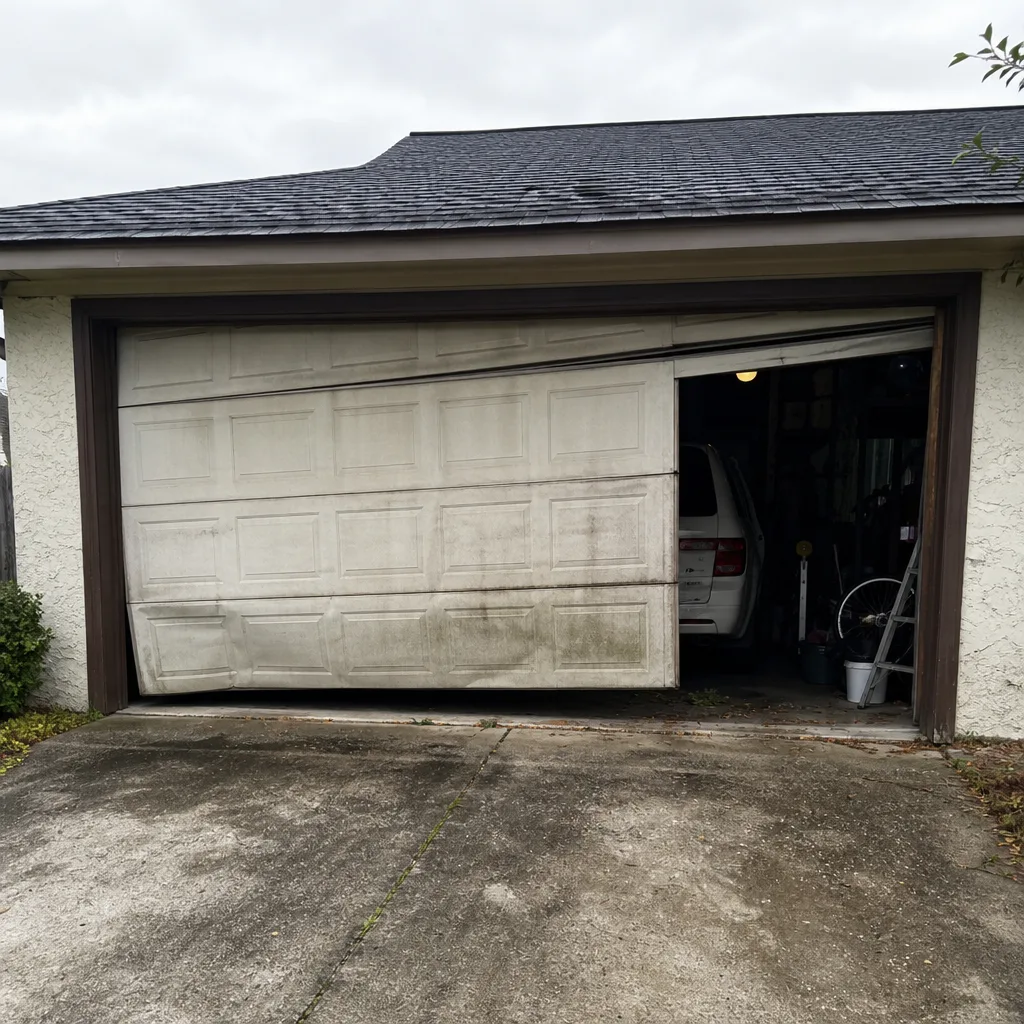 Before
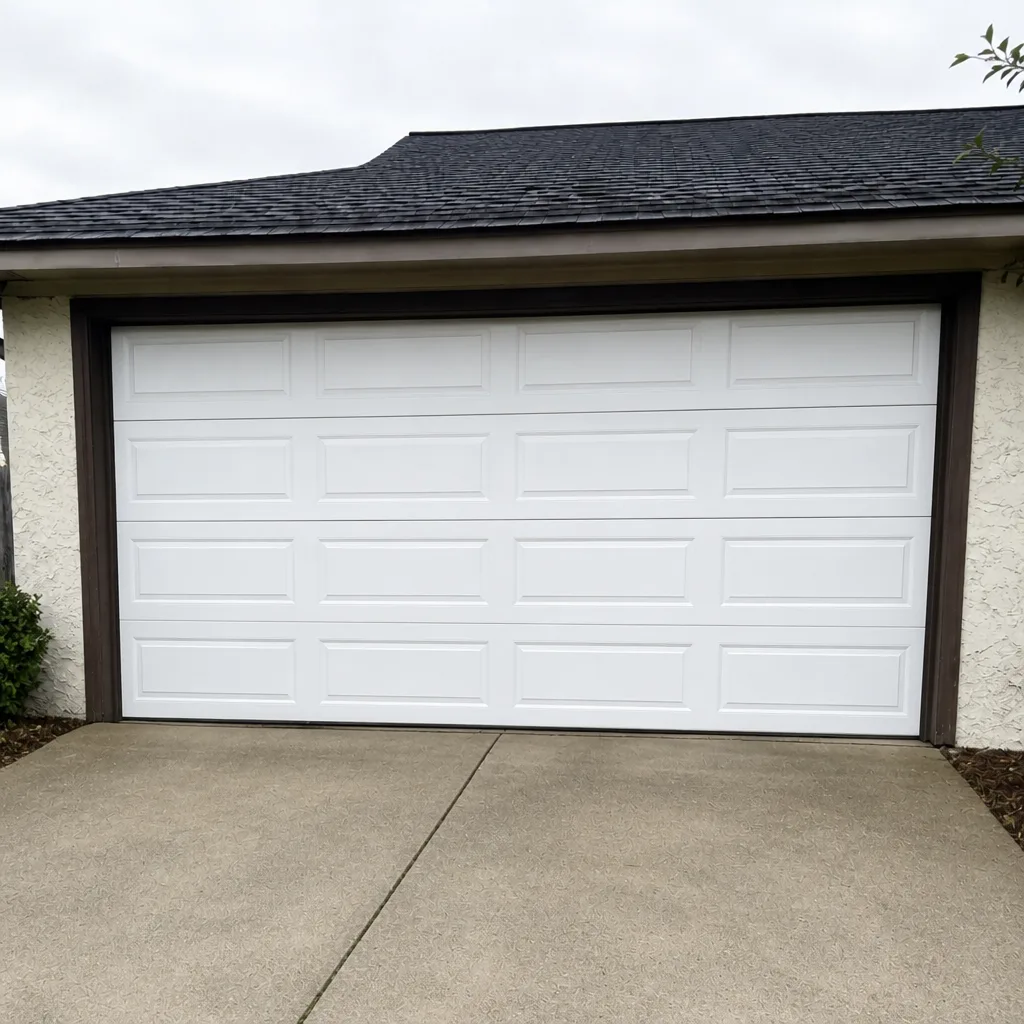 After
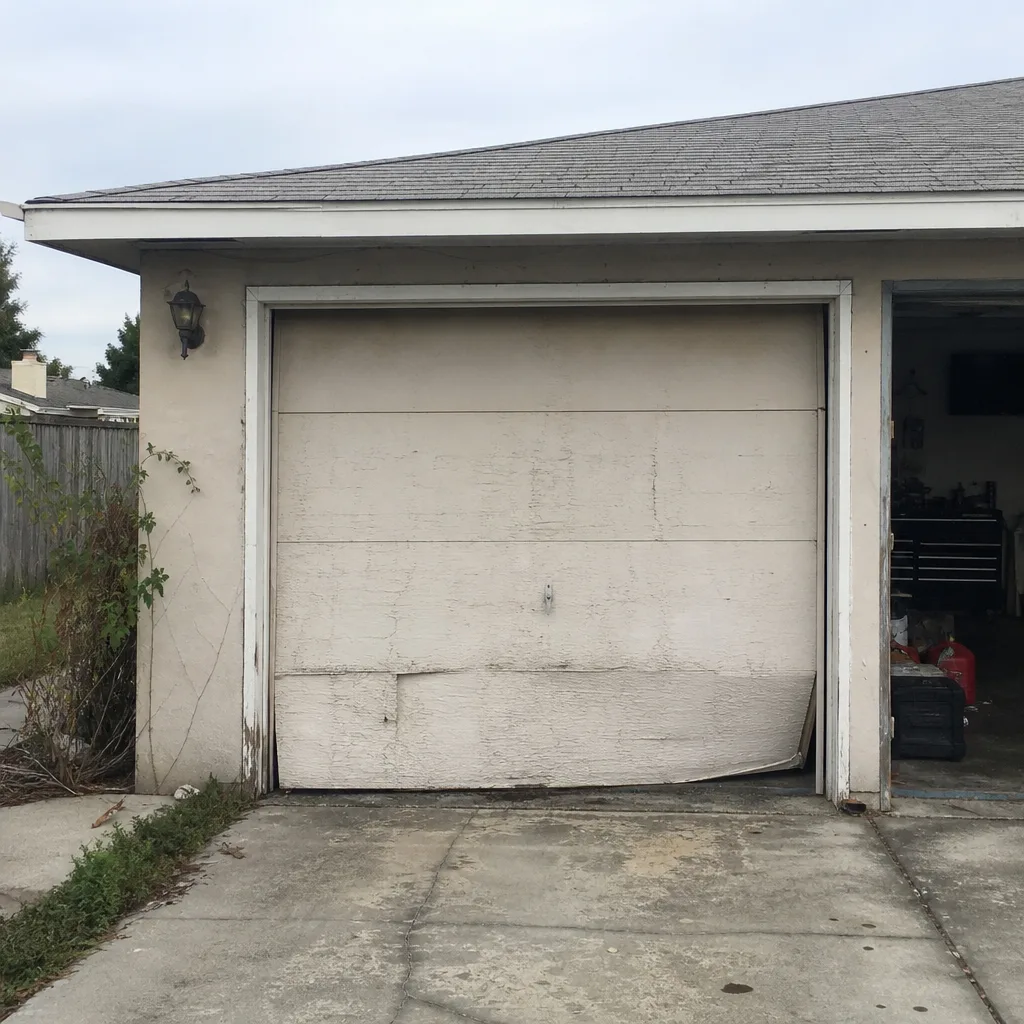 Before
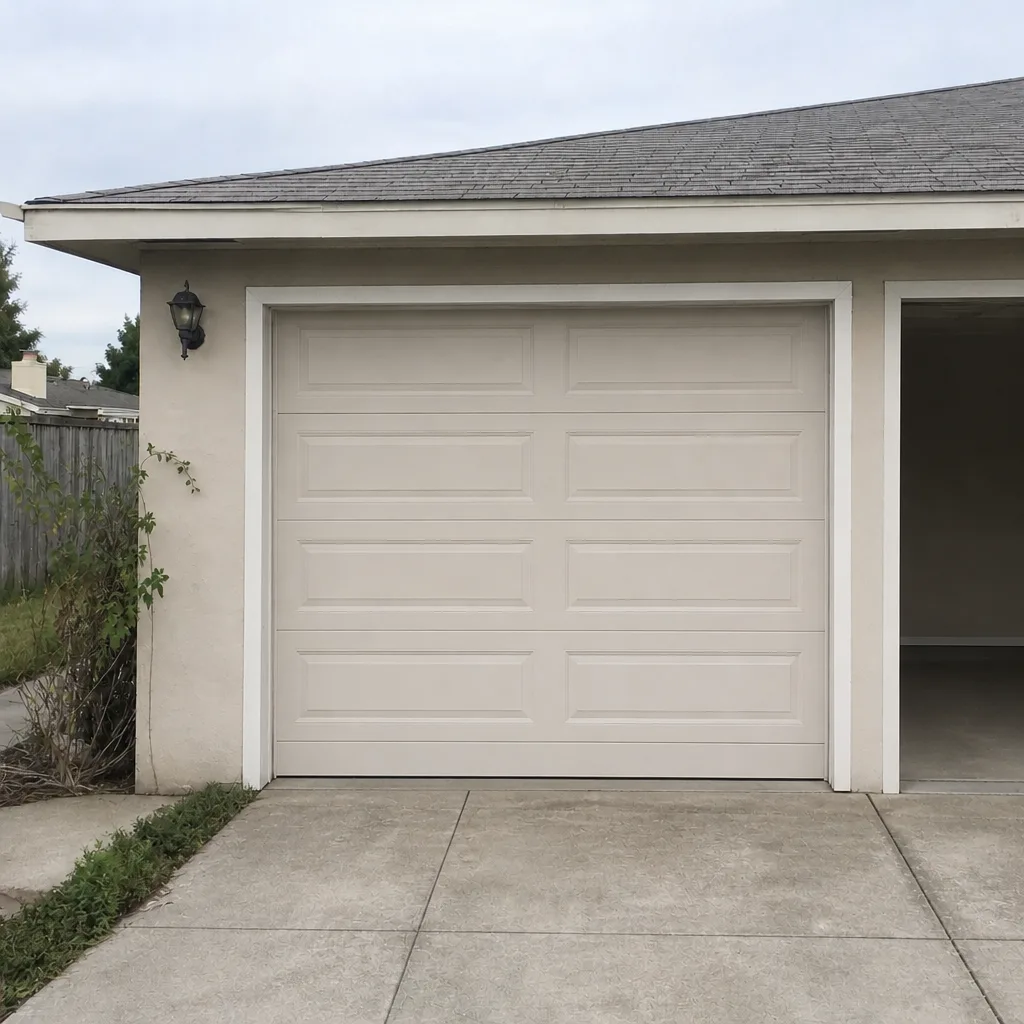 After
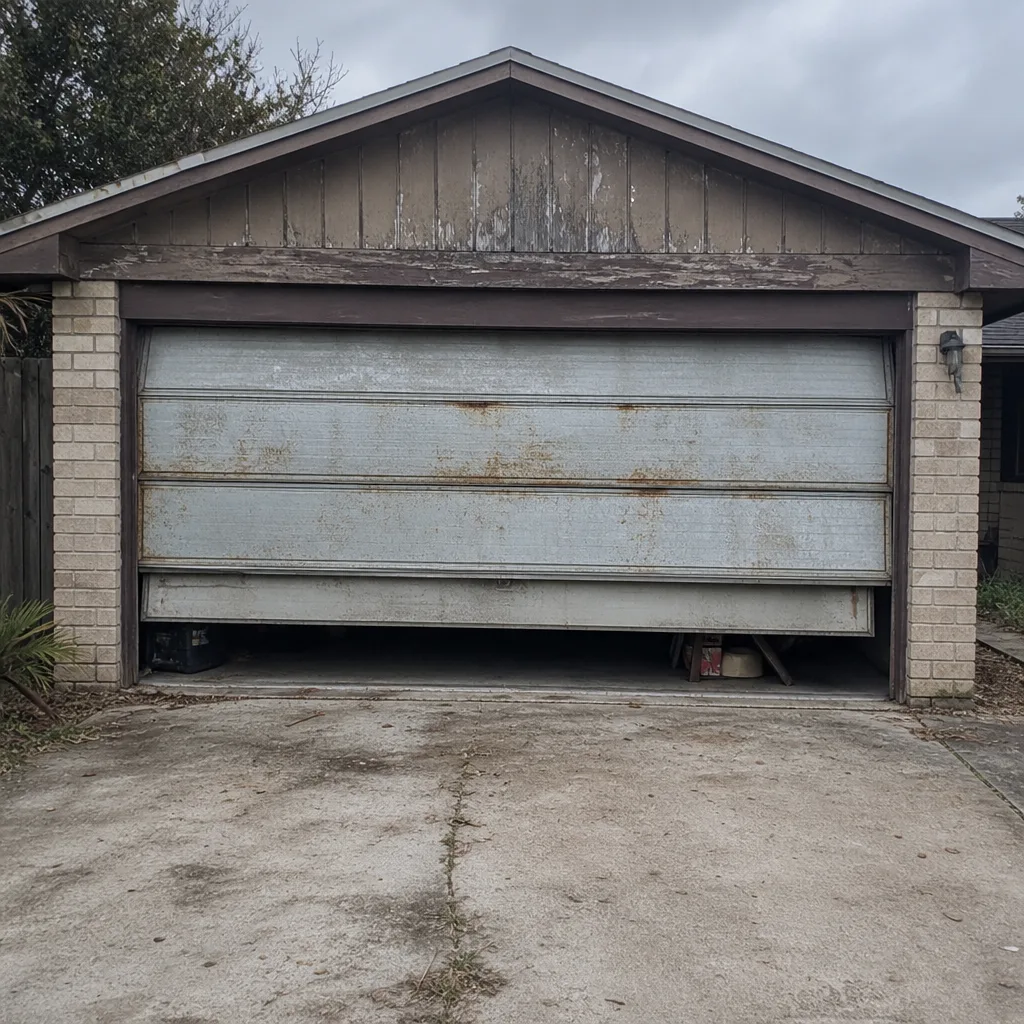 Before
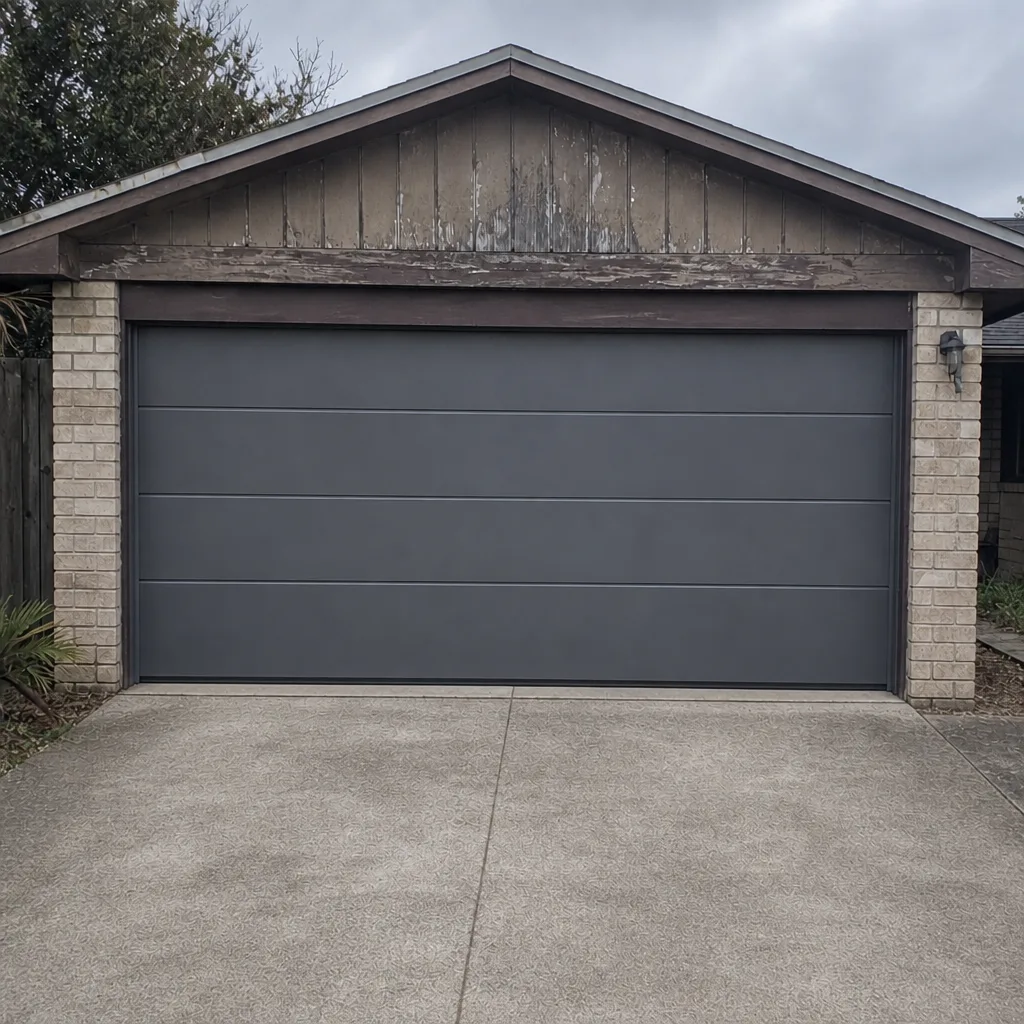 After
When to Call a Professional
Call a professional the moment the problem involves a spring, a cable, or a failed balance. Those three are the dangerous jobs, and they’re the ones a trained technician should handle. Call when the opener runs but the door doesn’t move, when the door reverses on every cycle after a sensor clean, or when the door hangs crooked. Call when the door is old enough that the repair is the start of a pattern, and the replacement math starts to favor a new door. Our free estimates in New Smyrna Beach cover all five root causes, and the price is quoted and agreed before any work starts. Call (844) 542-2340.
Our technicians have up to 12 years of experience and work on whatever brand is on your home, from LiftMaster openers to Amarr or Wayne Dalton doors. If the diagnosis is a repair, we repair. If it’s an opener, we know the electronics. If it’s a full replacement, we install new doors as well. One call, one specialist, no handoff.
Frequently Asked Questions
Troubleshooting itself is usually folded into the service call, so the price you’re quoted is for the fix, not the diagnosis. Typical repair costs in the New Smyrna Beach area range from around $180 to $340 for a spring service, and opener repairs commonly land in the $150 to $300 range. A full new door install is a much larger measure-and-order job. Every price we give is an estimate, and the written quote sets the final price. Call (844) 542-2340 for an exact quote – estimates are free.
Yes, for emergencies we can often get to a stuck or unsafe door the same day. A broken spring or a snapped cable is a same-day priority because running the opener on a failed balance can cause more damage. Tell us what the door is doing and what it sounds like, and we’ll tell you what to expect. Call (844) 542-2340 for same-day emergency dispatch.
No, the price is quoted and agreed before any work starts. We look at the problem, explain what’s causing it, give you a price, and we don’t touch a tool until you’ve said yes. If we find something that genuinely changes the scope, we tell you before doing anything – no surprise invoice at the end.
The local professionals we connect you with are licensed and insured as their state requires, and they’re trained on the eight major brands we work on. Because the company is a specialist, every job is a garage door job. If you want to know what to expect on a specific repair, call (844) 542-2340.
Yes, and it’s a bigger problem in New Smyrna Beach than it might seem. The local humidity hardens and flattens bottom seals faster than in a dry climate. A rotted seal lets water and pests in, rattles in wind, and can even trip the safety sensors. It’s a small part and a straightforward replacement – and much cheaper than the water damage or door damage that comes from ignoring it.
Run the manual release test. If the door is extremely heavy or won’t lift by hand with the opener disconnected, it’s a spring or balance problem. If the door lifts easily by hand but the opener won’t move it, the opener is the problem. That single test separates the two, and it’s the first thing we ask about when you call.
The Bottom Line
Most garage door failures leave a signature, and a homeowner who can read it saves time, money, and risk. The five root causes – opener, spring, track and roller, safety sensor, and cable – cover nearly every “my door is broken” call we get in New Smyrna Beach. Two of them, broken springs and cable failures, are where diagnosis ends and a trained technician starts. For the rest, a careful look and a clean sensor go a long way. When the door gets complicated, one call gets you a specialist who works on your brand, knows the electronics, and doesn’t hand you off. Call (844) 542-2340 for a free estimate.
If you’d rather start at the top, our New Smyrna Beach Garage Door Repair Pros homepage has the full picture of what we handle. For everything covered here, the fastest path from a broken door to a fixed one is a single call and a written quote.
Written by the team at New Smyrna Beach Garage Door Repair Pros.